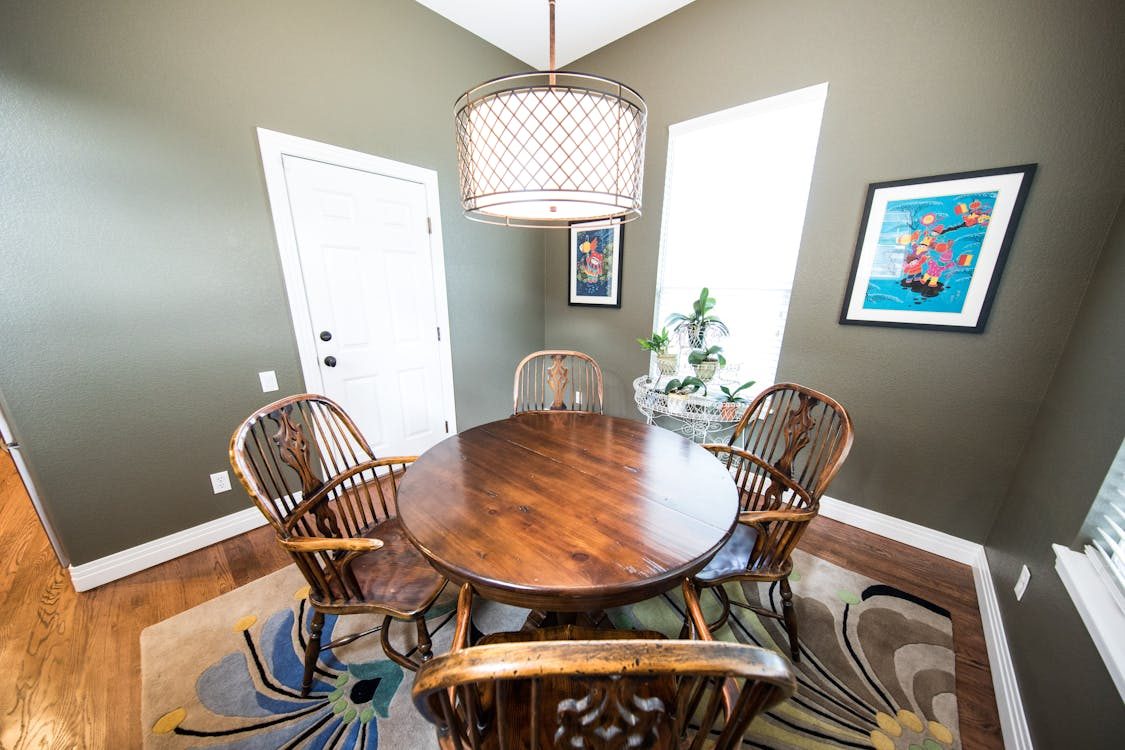
In a small dining room, the “best” dining table set is the one that protects walkway space while still feeling comfortable for everyday meals. Shape matters more than you think because corners, circulation paths, and how chairs pull out can make a room feel either easy or constantly in the way.
If you’re furnishing a compact home, it helps to think like a shop fitter: choose the shape that suits how you actually move through the space, not just what looks good online.
Round and oval dining table sets usually feel easiest in tight rooms because you can flow around them without catching hips, bags, or chair backs on sharp corners. Rectangular sets can still work brilliantly, but they need to match the room’s direction and your main walking route.
In small spaces, the “wrong” shape creates daily friction: chairs bump walls, you squeeze past corners, and the table becomes an obstacle rather than a social hub.
Measure your usable “dining zone”, not the whole room, and pick a shape that keeps paths clear to doors, the kitchen, and any living area. The usable zone is the area where the table can live without blocking drawers, door swings, and through-traffic.
A practical benchmark is simple: if you constantly bump into corners, round or oval usually wins. If the room is long and narrow, a rectangular or oval set tends to fit more naturally without wasting space at the sides.
Choose seat count based on real life: who eats there most days, and how often you genuinely host. In a small dining room, a set that’s perfect for daily use will always feel better than a bigger one you resent every time you walk past it.
A 2-seater dining table set is often the sweet spot for flats, breakfast nooks, and couples because it’s easy to place and doesn’t dominate the room. It can also double as a work-from-home spot, which matters when space is doing multiple jobs.
If you regularly eat as a family, a compact dining table and chair set can work well, but only if the chairs tuck in neatly and you still have a clear route around the table.
Use this quick flow before you buy:
Plan for daily comfort first, then solve entertaining with an extendable top, a bench that tucks under, or one or two occasional chairs you bring out only when needed.
Start with clearance, not table measurements. The right dining table set is the one that lets chairs pull out and people walk past without that awkward sideways shuffle.
Instead of obsessing over an exact centimetre-perfect rule, aim for practical ranges: enough space behind a seated person to stand up comfortably, and enough room on main walkways so you are not constantly brushing chair backs. If your dining area sits near the kitchen, factor in drawers, ovens, and fridge doors that need to open freely.
A simple way to sanity-check size is to imagine daily habits: one person cooking while another sets plates, someone carrying a laundry basket through, kids moving between rooms. If the table interrupts those routines, it will feel too big even if it technically “fits”.
Do this once and you’ll avoid most small-room mistakes:
If the dining area is part of an open-plan space, create a visual boundary so it feels intentional rather than cramped. A rug under the table, a pendant light above, or even a narrow sideboard nearby can “zone” the area and make a compact set look properly placed.
Yes, they’re often the best compromise: compact for everyday life, then bigger when you need it. In small homes, that flexibility usually beats buying a larger fixed table that makes the room feel tight all week.
The most common extension styles are easy to understand. A butterfly leaf folds and stores inside the table, so you’re not hunting for extra parts. Drop-leaf tables have hinged sides that fold down, which is great if the table sometimes needs to sit against a wall. Pull-out ends slide out to create space for a leaf, but you’ll want to be sure you have room to stand while extending it.
An extendable dining table set is worth it if you host at least monthly, want one table for dining and work, or need the option of extra seats without giving up space every day. It’s also a smart choice if you’re in a rental and your layout may change.
It’s not worth it if you never extend it, find the mechanism annoying, or have nowhere for extra chairs. The table may expand, but seating still needs a plan.
A real-life scenario: weeknight meals for two at a compact table, friends over on Saturday with the leaf extended, then back to slim mode on Sunday so the room feels open again.
Arrange your dining set to keep the room feeling open while still being genuinely usable every day. The best layout is the one that protects your main walkway and keeps chairs easy to pull out without hitting walls, cabinets, or doors.
Centre placement only works if you have enough clearance all the way round. In ultra-tight rooms, a wall-aligned layout is often more comfortable because it preserves a clear route through the space. Corner-nook placements can be brilliant with a small round table or a compact square set, especially if you use a bench to reduce chair clutter.
In open-plan rooms, place the table so it “belongs” to the dining zone rather than floating randomly. A rug, pendant, or sideboard can help anchor it and make the area feel calm rather than busy.
Template 1: Round 2–4 seater in a nook
Put a small round table in the centre of a nook, then use two chairs plus a bench on the wall side. You get the circular flow of a round top, with the bench keeping the footprint tidy.
Template 2: Slim rectangular table parallel to the longest wall
Run a narrow rectangular table along the room’s length and choose chairs that tuck fully under the tabletop. This keeps your main walkway clear and suits long, narrow dining rooms.
Template 3: Drop-leaf against the wall (daily compact, guest-ready later)
Keep the table folded down against a wall for everyday meals or laptop time, then open it only when guests arrive. Pair it with stackable or occasional chairs you can store elsewhere.
What to avoid: blocking doors, pushing the table too close to kitchen work zones, and buying bulky chairs that don’t tuck in. In small dining rooms, chair shape matters almost as much as table shape because that’s what you feel when you move around the room.

 On Sale Products